Love to Laugh and Learn

Fun and interesting learning activities to do with the children in your life

  • Home
  • About Me
  • Attractions
  • Recipes
  • Privacy Policy

How to Eat A Pumpkin: A Lesson From a 3 Year Old

November 3, 2014 by Mama Carmody 13 Comments

Print Friendly, PDF & Email

How to Eat A Pumpkin: A Lesson From a 3 Year Old

How to Eat a Pumpkin

How This All Started

From the time we took our 3 year old great-nephew to Stuckey Farm’s Harvest Festival, he has been obsessed with eating a pumpkin. It started as we were leaving the pumpkin patch. He asked if he could eat his pumpkin. We told him that he could make yummy things from his pumpkin, like pumpkin pie or pumpkin bread; but little did we know that this was NOT the end of this discussion.

Eating Raw Pumpkin?

Since he asked about eating his pumpkin a couple more times on the way home, I decided I should do a little research. I grew up with a garden in my backyard and we grew lots of fruits and vegetables. I have seen and eaten a lot of them raw, including peas and zucchini squash but I had never eaten a raw pumpkin. As a matter of fact, I had never eaten pumpkin in any form other than as some type of a dessert. I searched the internet for information and recipes. I did find out that it was safe to eat pumpkin raw but I didn’t have much luck in finding ways to cook it other than as an ingredient in a recipe.

I decided it was time for some experimenting with pumpkin. My niece, Nicole, dropped Jeremiah off with his pumpkins; the one he picked with us and one for us to carve into a jack-o-lantern. She informed me that he was still very interested and excited about eating his pumpkin. She said she even caught him, one day, sitting in the kitchen floor, on top of his jack-o-lantern pumpkin, with a fork in his hand and his small pumpkin sitting in front of him. When she asked him what he was doing he told her he was going to eat his pumpkin. She was able to convince him to wait.

How to Eat a Pumpkin: scooping out pumpkin "guts"
How to Eat a Pumpkin: scooping out pumpkin “guts”

Preparing the Pumpkin

Since Jeremiah was so interested in eating his pumpkin I didn’t want to buy canned pumpkin for our recipes. I wanted him to experience actually eating his pumpkin. So the first thing we needed to do was make pumpkin puree. I found instructions on The Pioneer Woman: Homemade Pumpkin Puree. (My daughter swears by this site.) I cut the pumpkin in half and he helped me scoop out the seeds and “guts”. We started out using spoons but found out our hands did a better job. We saved the seeds to roast later.

I had purchased an inexpensive child’s pumpkin carving set at the Dollar Tree. It had a safety knife in it. This way Jeremiah was able to help me cut up the pumpkin into pieces. It was a pretty flimsy knife. I’m going to have to find something better for him to use in the future. We got the pumpkin all cut up and onto a lined cookie sheet so we could pop it in the oven to roast.

Our Experiment with Raw Pumpkin

How to Eat a Pumpkin: eating raw pumpkin

While cutting up the pumpkin for roasting we did a little experiment. We tried eating the raw pumpkin. First, we each had a taste of just the plain, raw pumpkin. We both thought it was kind of tasteless. It wasn’t bad but there wasn’t anything special about it either. I thought it resembled raw zucchini. We then tried it with some salt. It was better with salt. Our next taste test was with cinnamon and sugar. Jeremiah really liked it this way and ate several pieces. I thought the experiment was over but Jeremiah wanted to try one more thing. He wanted to try it with cinnamon, sugar and salt. I can’t say I was overly excited about this one but in the true act of experimentation, I knew we should give it a try. Neither of us was very impressed with that taste, but at least we tried it.

Jeremiah and I discussed our little experiment and our findings. He decided that his favorite way to eat raw pumpkin was with cinnamon and sugar and mine was with salt.

How to Eat a Pumpkin: fresh from the farm

My Hypothesis

I’m still not quite sure where Jeremiah got the extreme interest in eating his pumpkin. By the time children are three years old, they usually associate a pumpkin with Halloween and carving a jack-o-lantern but Jeremiah never mentioned that to us. All he ever talked about was eating his pumpkin. After doing a lot of thinking, I came up with a theory. Whenever we go pick apples, we pick them right off the tree and even eat some while we are picking. I believe that since we went to the pumpkin patch and picked the fresh pumpkin off the vine, Jeremiah thought was should be able to just eat it like we did the apples. Of course this is just a theory because only God understands the workings of a three year old boy’s mind.

Don’t miss my next post: How to Eat a Pumpkin, Part 2

Related Posts

How to Eat a Pumpkin, Part 2
Pumpkins are Orange; and Other Learning Concepts

Zombie Zapper Brain Boost Smoothie

Save

Filed Under: Articles, Autumn/Fall Tagged With: autumn, eat a pumpkin, eating pumpkin, eating pumpkins, educational activities, fall, fun learning, jack-o-lantern, pumpkin, pumpkin puree, pumpkins

Learning Through Laughter: Why Learning Should Be Fun

July 19, 2025 by Mama Carmody Leave a Comment

Print Friendly, PDF & Email
A colorful vertical Pinterest image collage with photos of children learning through fun activities like crafts, cooking, and music. Text reads: “Learning Through Laughter: Why Learning Should Be Fun.”

“A joyful heart is good medicine…” – Proverbs 17:22

My Mission

From the very beginning of Love to Laugh and Learn, my mission has been simple: to show that learning should be fun — not serious and stiff, but filled with joy and meaning. In fact, the more joy we bring into it, the more it sticks.

Natural Learners

Children are natural learners—curious, creative, and constantly absorbing the world around them. But here’s the key: they learn best when they’re having fun.

Whether it’s identifying colors, discovering shapes, or exploring the roles of community helpers, I’ve always believed in making learning hands-on, engaging, and joyful. Flashcards have their place, and repetition absolutely helps secure knowledge—but I believe that repetition works best when it’s wrapped in meaningful play, exploration, and real-life application.

Love to Laugh and Learn Has Grown

Over the years, Love to Laugh and Learn has grown—just like the little ones it serves. My background is strongest with early childhood (birth to Kindergarten), but now that I’m a grandmother to kids who are 9½ and 12, you’ll notice the blog is expanding to include content for older children, too.

You’ll find posts that cover:

  • Early learning basics like colors, shapes, and numbers
  • Themed units like Fun with Music, where we explore instruments and sounds
  • Holiday activities filled with crafts and conversations
  • Community helper studies that bring real-world roles into focus
  • Printable resources, educational games, and more!

In the early days of the blog, I often highlighted family-friendly attractions and events around Indianapolis, where I used to live. Now, after a decade in Texas, I’m looking forward to doing the same here—especially once my daughter, son-in-law, and grandkids move back nearby. I’m excited to start reviewing local sites and activities again that make learning an adventure.

My Goal

It is still my goal is to support families and teachers alike in creating joyful, meaningful learning moments. Most ideas can be adapted wherever you live and whatever stage your learners are in—whether you’re homeschooling, supplementing school lessons, or simply having fun at home.

Science Behind Learning Should Be Fun

And in case you need some science to back it all up: Dr. Kathy Hirsh-Pasek, a senior fellow at the Brookings Institution and professor of psychology at Temple University, says:

“Play is not a break from learning. It’s the way young children learn.”
Research shows that playful learning boosts cognitive development, social-emotional skills, and long-term memory retention (Zosh et al., 2017, American Academy of Pediatrics).

So whether you’re a parent, grandparent, teacher, or caregiver, I’m so glad you’re here. Let’s laugh, explore, and learn together—because learning should be fun, every step of the way.

Most sincerely,
Mama Carmody
Love to Laugh and Learn

Related Posts

Learning Should Be Fun (my blog’s first ever post)

Colors – Overview

Teaching Shapes to Preschoolers: An Overview of Fun Learning Activities

Filed Under: Uncategorized Tagged With: educational activities, family friendly, family friendly activities, fun learning, homeschool, homeschool ideas, learning fun, Learning Should Be Fun, learning through laughter

Learning Fun at Disney: Manners

May 23, 2023 by Mama Carmody Leave a Comment

Print Friendly, PDF & Email

I think learning should be fun. I can’t think of a more delightful place to learn than Disney!

Manners

Today, we are going to tackle manners. Using good manners is such an important attribute. Your child will have many opportunities to use their manners and to see manners exhibited while at Disney.

Please and Thank You

The first, in my book, is the simple, “please” and “thank you”. The cast members work hard and sometimes in less-than-ideal situations. It can be really hot or stormy and the cast members still have to be there to care for you. A simple thank you can add some joy to their day.

There will be many opportunities, during the day, to use your manners. One of my favorite times is mealtime. 

     “Will you please pass the salt?”

     “Thank you for letting me get dessert.”

My family came from the south. We were taught to throw in a “please” or “thank you” when answering a question.

     “Would you like tomatoes on your salad?”

          “No, thank you.”

 “Would you like ice cream for dessert?”

          “Yes, please.”

The Napkin

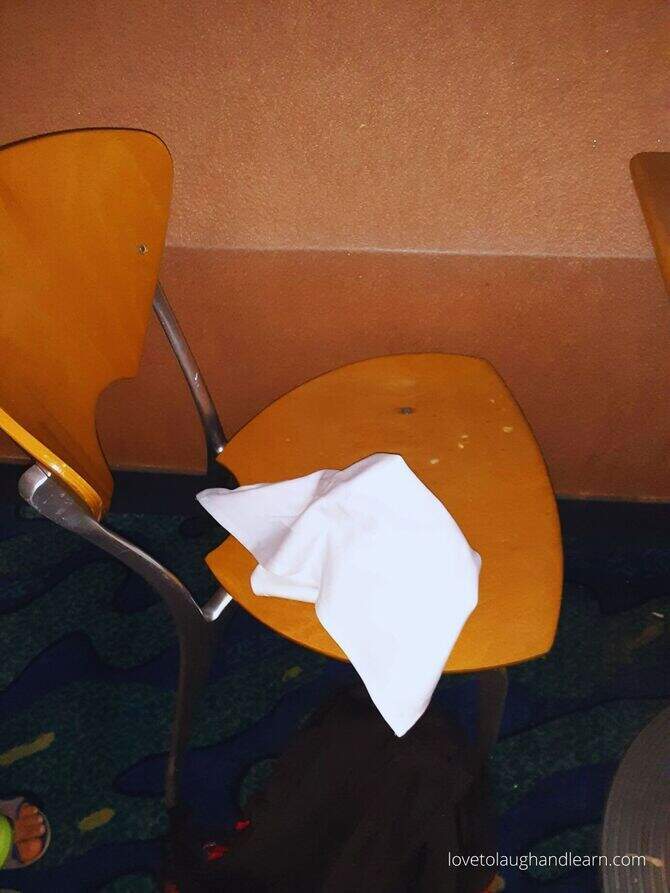
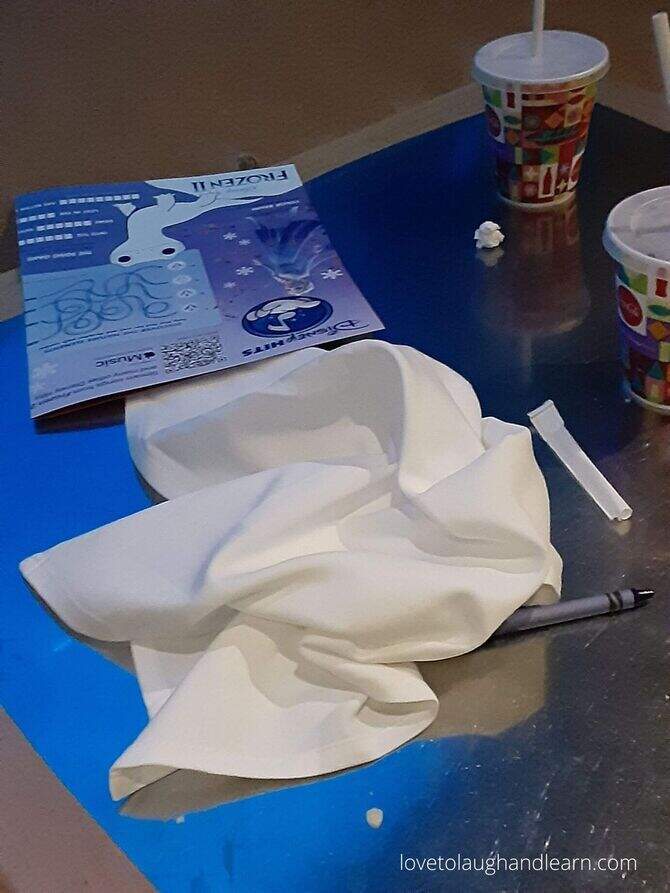
Another manner, that is not so widely practiced, is the placing of your napkin. If it’s a restaurant with cloth napkins, we place them in our laps. 

Did you know you can send a secret message to your server by where you place your napkin? (Of course, that is, if your server knows the code.) If you leave the table, but will be returning, place your napkin on your chair.

When you are totally finished with your meal, place your napkin on the table next to your plate. This lets the server know they can start taking away your dirty dishes and bring you the bill. 

I hope this post on manners has been fun and has given you some ideas of how to use them. What other manners might you use, while on your trip? Don’t forget to continue using them when you get home.

Related Posts

Learning Fun at Disney: The Importance of Imagination

Ready to Plan Your Disney Trip?

We always have great family time and make special memories when we travel to Disney. Click here to purchase tickets and start making your special trip plans.

Filed Under: Attractions and Events, Learning Activities Tagged With: Disney, love to laugh and learn, Mama Carmody, manners, napkin, please, thank you

Teaching Shapes to Preschoolers: An Overview of Fun Learning Activities

April 28, 2013 by Mama Carmody 15 Comments

Print Friendly, PDF & Email


When I taught preschool, I always introduced colors before shapes. I did the same thing at home with my own children. Looking back, it makes sense. Children seem to notice colors first. So, I followed their natural curiosity and used it as a guide.

Just like with colors, our first lessons on shapes weren’t formal. My kids learned about them during everyday routines—like getting dressed or playing with toys. I made a habit of talking to them throughout the day. Throughout our routine, I would point out circles, hearts, or stars and describe what we saw together. Sometimes I’d say, “Look at those colorful stars on your socks,” or “This strawberry looks like a heart!”

Whether your child is just a few days old or a curious three-year-old, talking to them consistently helps. It builds vocabulary, observation skills, and a strong foundation for future learning. Their understanding of the world will grow faster than you expect—especially when it’s grounded in love, play, and shared discovery.

Learning Through Play

Most early learning should come through play and conversation. Read books together, do simple crafts, play on the floor, and talk about what you’re doing. These small moments are powerful teaching tools.

In the posts below, you’ll find shape-themed book recommendations, craft ideas, fun snacks, and hands-on activities that introduce common forms in playful ways. You can explore one shape a day, mix and match, or follow the full series—it’s completely up to you. Just remember: the most important thing is to have fun. When children are having fun, they’re learning!


Related Posts

The Lessons – Overview
Circles: Learning Activities for Shapes
Ovals: Learning Activities for Shapes
Squares: Learning Activities for Shapes
Rectangles: Learning Activities for Shapes
Triangles: Learning Activities for Shapes
Diamonds: Learning Activities for Shapes
Stars: Learning Activities for Shapes
Hearts: Learning Activities for Shapes
Learning Should Be Fun
Colors – Overview

Follow on Bloglovin

Filed Under: Articles, Learning Activities, Shapes Tagged With: circles, diamonds, educational activities, fun learning, hearts, laugh, learn, learning, learning about circles, learning about diamonds, learning about hearts, learning about ovals, learning about rectangles, learning about squares, learning about stars, learning about triangles, learning concepts, learning fun, learning opportunities, learning shapes, love, love to laugh, love to laugh and learn, love to learn, making learning fun, ovals, rectangles, squares, star, triangles

Celebrating the 4th of July with Children

July 1, 2015 by Mama Carmody 10 Comments

Print Friendly, PDF & Email

Celebrating the 4th of July with Children

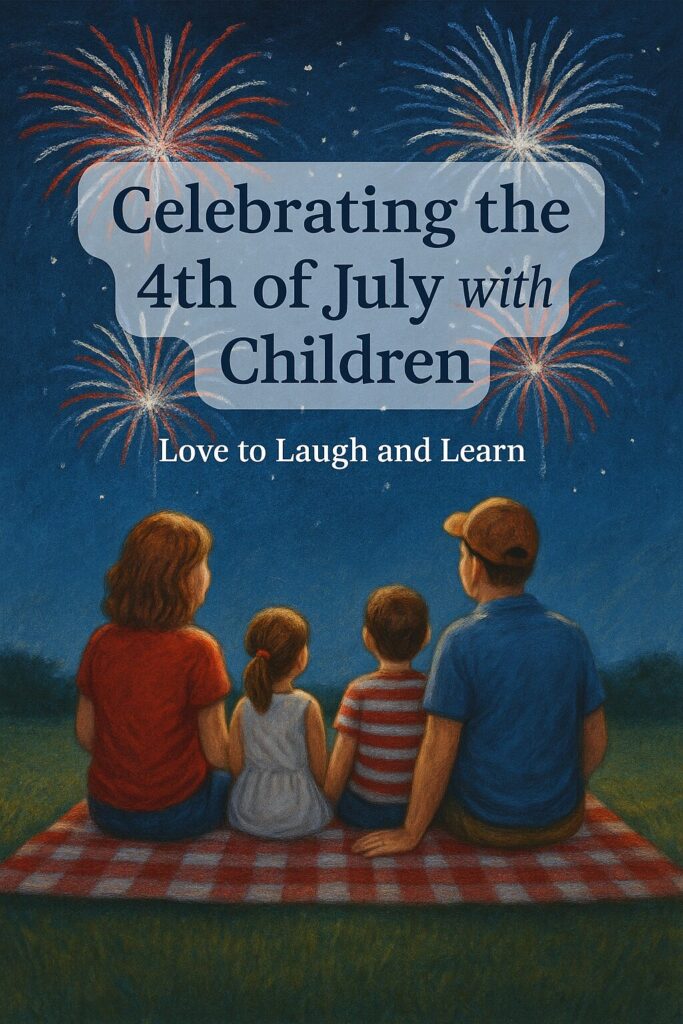
Illustrated image of a family sitting on a red-and-white checkered blanket, watching fireworks on the 4th of July, with the text “Celebrating the 4th of July with Children – Love to Laugh and Learn” over a starry night sky.


4th of July! A time to celebrate the birthday of the United States of America. For me, the 4th of July is the 2nd biggest holiday of the year. I love celebrating the 4th and all it represents. I believe we, too often, fail to remember what it took to become a nation.

People traveled across the ocean, in uncomfortable conditions, to get to the New World. Once here, they experienced many hardships, including sickness and death. Settlements were established but then they realized they wanted to make their own laws and govern themselves. They had to fight to become independent and begin building their own nation. The freedoms we have today are granted to us because of the people that sacrificed their lives fighting for it. We need to appreciate and celebrate their sacrifices.

Patriotism has always been taught and celebrated in our family. It is something I have tried to instill in my children and now I hope to pass it on to my grandchildren. Now that I have a son-in-law serving in the Armed Forces, it means even more to me.

Celebrating the 4th of July with Children

You might be wondering how to teach your children the deeper meanings of the 4th of July. If you have been following me for very long you know I like to start with books. You will find several that I have read and reviewed below in the Story Time section. Choose a couple books and share them with your child. You will be surprised the conversations that will come up. Maybe not at the time you are reading but sometime over your 4th of July celebration, someone will bring up something you read to them in a book.

Start teaching your children how to respect the United States flag. Did you know that during a parade you are supposed to stand for the American Flag? You don’t have to stand every time you see one because, especially during an election year, many groups or floats might have the American flag with them. The very first American flag in a parade (usually carried by an Honor Guard) should be shown our respect by standing (removing head coverings) and placing your right hand over your heart. It’s not a time for chatting and goofing around but for remembering what the flag stands for and the cost of freedom. My 23 month old grandson is all ready learning this.

Craft

4th of July Puzzle from Craft Sticks

D.I.Y. Flag Puzzle

I got the inspiration for this from Ginger Snap Crafts. I did not use the 3 ½” sized sticks to hold all the pieces together because I wanted it to be a puzzle. Instead I put magnets on the back of each of the large sticks so my grandson could put them together on the metal pan he plays with.

I also found a new product: foam craft sticks. I was going to use the large wooden craft sticks for this craft but when I found the color foam sticks I decided to give them a try.

Foam Craft Sticks
Foam Craft Sticks

Materials Needed

Foam craft sticks (tongue depressor size)
Small star stickers
Magnets
White foam sheet
Glue
Scissors

Directions

  1. Cut the rounded end of 3 blue foam craft sticks into 3 inch pieces.
  2. Get 3 red foam craft sticks.
  3. There were no white craft sticks in the set I purchased so I bought a white piece of craft foam and cut out 2 white craft sticks, using one from the package as a pattern.
4th of July Craft: White foam craft sticks for flag puzzle craft.
  1. Line up the longer foam sticks starting with a red stick, then alternate white and red.
  2. Glue the 3 short blue pieces on top of the top three large craft sticks. This makes your blue field for your stars.
  3. Add stars to the blue field. I couldn’t find white stars to purchase so I use a star shaped punch and punched them out of white card stock. I was hoping to punch them out of the white foam but the foam was too thick to get inside the punch. (updated 6/22/25, with affiliate link) I just found this punch on Amazon and it says it will punch foam. Star Punch on Amazon
4th of July: Stars for Flag craft stick puzzle.
  • Turn the sticks over and add magnets to the backside.
  • 4th of July Craft: Attaching magnets to back of foam pieces.
    4th of July Craft: Attaching magnets to back of foam pieces.
  • Now you can put your flag puzzle together.
  • 4th of July Craft: Flag Craft Stick Puzzle
    4th of July Craft: Flag Craft Stick Puzzle

    Using the foam sticks made the project go quickly but if you want to make it more of a craft for your child, then I suggest using the wooden craft sticks and letting your child paint them the colors you need.


    Story Time

    (affiliate links included below)

    Celebrate Independence Day: With Parades, Picnics, and Fireworks by Deborah Heiligman

    Reading Level: Ages 6 to 10 yrs old
    This is a picture book with bright illustrations and lots of information. Your child will learn a little of our history and a lot about celebrating. It shares many different ways American’s celebrate the 4th of July. You might dress in red, white and blue or you might head to the beach. If you need some ideas, you will find plenty in this book.

    Independence Day (Our Country’s Holidays) by Sheri Dean

    Reading Level: Ages 4 to 8 yrs old
    Although this book mainly covers Independence Day for the United States, it also talks about Canada’s special independence day, which is called Canada Day. This is a great book for the younger child. It explains Independence Day in general terms. I like that it points out that Independence Day is our country’s birthday. Even young children understand the concept of a birthday and the fact that we celebrate it.

    Independence Day (Holiday Histories) by Mir Tamim Ansary

    Reading Level: Ages 6 to 8 yrs old
    Although this is a picture book, it is packed with loads of information. If your child is interested in learning a little more about how the United States formed this book will be a great choice. It shares a little of the history of our ancestors coming from England. It talks of the first 13 original colonies and how they were treated by England. Your child will learn why we wanted our independence from England and ways we celebrate our nation’s birthday.

    Independence Day (Holidays and Festivals) by Rebecca Rissman

    Reading Level: Ages 3 to 6 yrs old
    This is a great book to introduce the 4th of July to younger children. The text is fairly simple. It covers a little of the history of the United States without going into too much detail. The illustrations are a mixture of bright photographs and drawings.

    Independence Day (Rookie Read-About Holidays) by Trudi Strain Trueit

    Reading Level: Ages 5 to 8 yrs old
    This is a cute little picture book that will help your child learn about Independence Day (4th of July). Your child will learn a little about our history and breaking from England. They will learn about some of the symbols and traditions for our 4th of July celebrations. How do you like to celebrate the 4th of July?

    Related Posts

    The American Flag and Its Hidden Message Celebrating Flag Day
    Earth Day: Gardening with Children

    Filed Under: Holidays Tagged With: 4th of July, 4th of July books, family traditions, fireworks fun, flag craft, Fourth of July, holiday, holiday fun, holidays, homeschool ideas, july, July 4th, patriotic, patriotic parenting

    • « Previous Page
    • 1
    • …
    • 3
    • 4
    • 5
    • 6
    • 7
    • …
    • 29
    • Next Page »

    Don’t Miss This Great Book

    Categories

    • Articles
    • Attractions and Events
    • Autumn/Fall
    • Children's Books
    • Christmas
    • Coloring Pages
    • Colors
    • Community Helpers
    • Contest
    • Cooking with Kids
    • eBundles
    • Free Printables
    • Gardening
    • Halloween
    • Holidays
    • Learning Activities
    • Music
    • Reviews
    • Sensory Bins
    • Shapes
    • Thanksgiving
    • Uncategorized

    Follow Me on Bloglovin

    Follow on Bloglovin

    Recent Posts

    • The Lame Valentine Sensory Bin
    • Hearts: Learning Activities for Shapes
    • “Someone I Love Has Gone to Heaven”
    • The Santa Claus Debate
    • Love to Learn about the Nativity
    • Children’s Books About the Nativity
    • The True Meaning of Christmas
    • Christmas Angels to Laugh and Learn With

    Check This Out

    Holiday Toy List – STEM Toys

    Books

    US Family Guide

    USFamilyGuide.com

    Recent Comments

    • Mama Carmody on Your Favorite Childhood Book
    • Lisa Smiley on Your Favorite Childhood Book
    • Harlow's Harvest on Eggs in a Nest: Cooking with Kids

    Copyright © 2026 · Lifestyle Pro Theme on Genesis Framework · WordPress · Log in