Love to Laugh and Learn

Fun and interesting learning activities to do with the children in your life

  • Home
  • About Me
  • Attractions
  • Recipes
  • Privacy Policy

Pumpkins are Orange; and Other Learning Concepts

October 26, 2011 by Mama Carmody 22 Comments

Pumpkins are Orange; and Other Learning Concepts


I thought I would take another object of the season and give you different learning activities that you can do while you are enjoying this time of year. Yes, some of the ideas are very basic and may seem obvious but sometimes when we are busy with house cleaning, cooking, baths, homework and may even work outside the home, a little extra help coming up with fun educational activities can be quite useful.
Learning Concepts: colors, senses, math concepts: size comparison, measurements, fine motor skills, biblical, reading

Colors

A lot of learning comes from simply talking with your child and challenging them to take a look at their surroundings. When you go to pick out your pumpkins this year discuss with your child the colors they see. The obvious color they will mention, when looking at a pumpkin, is that it’s orange but there are probably other colors on it too. Some of them have green spots or possibly dirt stuck on it. What color is the stem? Is it brown or is it still green? If you are in a pumpkin patch, the vines may still be laying around. Are they still green or have they turned brown? Possibly some of the leaves on the vines have turned yellow. Just keep talking and encouraging your child to take in the sights that surround them.

Pumpkins are Orange: Learning activities that include pumpkins.

(top)

Arts/Crafts

Click here and you can get a template of a pumpkin to print out and have your child color or paint it. After your child has applied the color, cut out some eyes, noses and mouths. Let your child decide what kind of facial features they want to put on their pumpkin. If you have children that cover a wide age span, let the older ones cut out the facial features for the little ones.

(top)

Size Comparison

Do you have more than one child in your house? Did you purchase more than one pumpkin for your front porch? Take the time to talk about the different sizes you have. Have your child point out the biggest one and the smallest one. Is there a middle size one? Even some of the fast food restaurants don’t realize that you can’t have a middle size if there isn’t a large and a small one.

(top)

Biblical

There are many interesting ways to incorporate biblical lessons in the fun activities you are doing. Here is a fun one that you can do while carving your pumpkins this Halloween.

Materials

Large pumpkin and a carving knife.

Object Lesson on Prayer

{cut off top of pumpkin}
Lord, open my mind so I can learn new things about You.
{remove innards}
Remove the things in my life that don’t please You.
Forgive the wrong things I do and help me to forgive others.
{cut open eyes}
Open my eyes to see the beauty You’ve made in the world around me.
{cut out nose}
I’m sorry for the times I’ve turned my nose at the good food You provide.
{cut out mouth}
Let everything I say please You.
{light the candle}
Lord, help me show Your light to others through the things I do. Amen
Inspired by the children’s book, “The Pumpkin Patch Parable”, by Liz Curtis Higgs

(top)

Sensory Play/Fine Motor Skills

While you are busy carving that pumpkin, let you child have some fun with sensory play. Believe it or not squishing the slimy inside of a pumpkin and picking out the slick seeds are great for their senses and fine motor skills. Why is sensory play so important to children? As Amanda Morgan explains on her blog, NotJustCute, children are wired to use their senses from the day they are born. Amanda says, “The senses are their most familiar, most basic way to explore, process, and come to understand new information.”

(top)

Measurements

Is there any better way to learn about measurements than by cooking with your family? And just think, when you are done with this math lesson, you get to eat the results!

There are many types of math skills involved in cooking. If your children are younger, just having them count is good for them. If you need 2 cups of flour, have the child count along. If your child is older, then cooking is a good way to introduce and strengthen their skills with fractions. If you need one cup of sugar, ask your child how many half cups would equal one cup.

The following recipe is one that my niece brought home from school when she was in the second grade. It became a family standard and we call it Stephanie’s Sweet Pumpkin Bread.

Stephanie’s Sweet Pumpkin Bread

4 eggs
½ cup water
1 cup vegetable oil
2 tsp. cinnamon
1 cup cooked pumpkin
2 tsp. nutmeg
1 ¾ cups molasses
½ tsp. ground cloves
1 cup brown sugar
2 cups whole wheat flour
1 tsp. salt
1 ½ tsp. baking soda

Instructions:
1. Break the eggs into a large mixing bowl. Beat well.
2. Add the water, oil, pumpkin, molasses and brown sugar. Beat well.
3. Sift in the flour, salt, soda, cinnamon, nutmeg and cloves.
4. Stir all the ingredients well.
5. Grease two loaf pans. Pour the batter into the pans. Be careful not to fill them more than 2/3’s full
6. Bake for 45 minutes to an hour at 350°.
7. Let the bread cool in the pans for at least 15 minutes before removing.

(top)

Great pumpkin books:

Speaking of great pumpkin books, how about the book about the Great Pumpkin:
“It’s the Great Pumpkin, Charlie Brown” by Charles M. Schulz
Reading Level: Ages 4-8
This is a wonderful book that should be shared from generation to generation.

Too Many Pumpkins by Linda White
Reading Level: Ages 4-8
Rebecca Estelle hates pumpkins because she had to eat tons of pumpkins when she was young. She doesn’t even want to look at a pumpkin. So how does she end up with a yard full of pumpkins and what does she do with them? Read this fun little book and find out.

Pumpkin Jack by Will Hubbell
Reading Level: Ages 4-8
This is a light-hearted look at the life cycle of a pumpkin named Jack. The plant’s cycle throughout the seasons is told in a simple, easy to understand, way.

Dr. Pompo’s Nose by Saxton Freymann and Joost Elffers
Reading Level: Ages 4-8
This is one of my favorite pumpkin books. I read this to my preschool classes every year and they loved it. It is written in rhyme, which I love. The way Freymann and Elffers carve facial features into the pumpkins, to give them personality, is absolutely adorable. Your child will enjoy helping Dr. Pompo figure out what the lost stem might actually be.

(top)

Related Posts

A is for Apples: You Can Learn More Than ABC’s From Apples

How to Eat a Pumpkin : A Lesson From a 3 Year Old

How to Eat a Pumpkin, Part 2

Pumpkins are Orange; and Other Learning Concepts
Thanksgiving Learning Activities
Thanksgiving Fun with Turkeys

Zombie Zapper Brain Boost Smoothie

Filed Under: Autumn/Fall, Learning Activities Tagged With: autumn, children, fall, learn, learning, learning concepts, orange, pumpkin prayer, pumpkins

Fun with Music: Woodwind Instruments

August 11, 2013 by Mama Carmody 45 Comments

Fun with Music: Woodwind Instruments


This post, “Fun with Music: Brass Instruments”, is written in collaboration with Shannon Wijnker, who used to blog on Mamamusing. Shannon is a music teacher and mother of four.

What is your favorite woodwind instrument; flute, saxophone, recorder or some other? Are you aware of all the woodwind instruments available for your playing and listening pleasure. I would suggest reading either “Woodwind (Instruments and Music)” by Daniel Nunn (for the younger child) or “Wind Instruments (How the World Makes Music)” by Anita Ganeri (for older children). You will see more details about these books below in the Story Time section.

Playtime
Craft
Musical Outings
Story Time
Games Online
Related Posts

Playtime

When you were younger, did you ever make a whistle with a blade of grass? That blade of grass works like the reed in a woodwind instrument. When you blow over the blade of grass it vibrates which causes the air to vibrate and the result is a whistling sound. If you have never done this here is what you do. Take a wide piece of grass and place it between your thumbs. Place your mouth over your knuckles and blow. Were you able to make a whistling sound? Sometimes it takes practice, just keep working on it. This is a fun thing to teach your children, they will think you are amazing.

Shannon from Mamamusing shared that a recorder is great for children to experiment with (and it is a woodwind instrument). You can find them very inexpensively at the dollar store. She also says, “Remember that it’s not just about making a beautiful sound, but playing and exploring the concept of sound. Children learn best by constructing their own concepts and ideas, and by trial and error. They will learn how to create a variety of sounds. Some of which they will like and some they will decide they don’t. Your concept of what is acceptable sound may vary from theirs. But be patient and let them explore.”

“A great resource for teaching them music (and how to play the recorder) is a magazine called “The Recorder Classroom”. I believe there are 4 issues printed so far. You can download both the music and accompanying mp3s online. They are fun to play and I find my students are motivated to learn the music, when they have great accompaniments to play along with.”

“As a child, this toy (by Fisher Price) was a great way to experiment with sound. I don’t know if you can still buy it in stores, but if you find it at a garage sale, or used online – it is a great toy! Or the saxoflute is another great option, because the child can build their own instrument with the various plastic pieces of tube. The sound created (high or low) will depend on the pieces they choose to use.”

Fisher Price Crazy Horn Set

*** You can find the Fisher Price version on eBay, as it has been discontinued by Fisher Price. You can find a similar toy on Amazon.com  The Quercetti Saxoflute.

(top)

Craft

Wind Instrument Made from Straws

Fun with Music: Woodwind Instruments: Craft
Fun with Music: Woodwind Instruments Craft

This craft is adapted  from Learning Ideas – Grades K -8


Materials Needed:

Drinking straws
Cardboard
Glue
Ruler
Scissors
Duct Tape

Instructions:

1. Cut 2 rectangular pieces of cardboard. (approx. 5 by 2 inches) I used scrap cardboard from an old box.
2. Cut the straws in varying lengths. I used 3”, 4”, 5”, 6” & 7”. You can use more straws and different lengths if you would like.

Fun with Music: Woodwind Instruments Craft

3. I didn’t trust simply trying to glue the straws into place because it has been my experience that plastic straws and glue are not long time friends so I glued down duct tape (sticky side up) to help secure the straws into place.

Adding Glue and Tape

4. Let the glue dry completely then place the straws on the tape, in order of length.

Placing straws for woodwind craft

5. Place the second piece of cardboard on top (having all ready glued the tape into place).

Fun with Music: Woodwind Instruments Craft - Attaching other piece of cardboard
Fun with Music: Woodwind Instruments Craft – Attaching other piece of cardboard

6. Since I used scrap cardboard I then added some brightly colored duct tape to decorate my wind instrument. Your child could color or paint it if you would like.
7. To hear the different sounds the instrument makes you need to blow across the top of the straws not straight into them.

Fun with Music: Woodwind Instruments Craft

(top)

Musical Outings

Take your children to any place that live music is being played. In Indianapolis, you can find many places that give free outdoor concerts during the summer. Maybe you have the same opportunities in your area. Outdoor concerts are a great way to introduce your children to live music because they can sit in their own lawn chair, on a blanket or even get up and dance around a little. Maybe you have older children or neighbors that participate in a school band. Take your children to see them. Expose your children to many types of music. Take the time to talk about what they are hearing, how it makes them feel and the different instruments they are seeing and hearing.

Shannon from Mamamusing wants you to know: “In London, there are several outdoor concerts and festivals in Victoria Park during the summer. One of the best is Sunfest (beginning of July). You can check out a video of my kids enjoying the multicultural music and dancing byclicking here.”

(top)

Story Time

Below you will find books that discuss the many different types of woodwind instruments and some are devoted to one type of woodwind instrument. Have fun exploring and learning about woodwind instruments with your child.

Clarinets (Music Makers) by Pamela K. Harris
Reading Level: Ages 6 and up
Give your child the opportunity to learn about clarinets with this interesting book by Pamela K. Harris. The book covers many aspects of the clarinet; from the way it is made to how it is played. The illustrations are pictures of actual clarinets and people playing them. Enjoy learning about this special woodwind instrument; the clarinet.

Flutes (Musical Instruments of the World) by Barrie Carson Turner
Reading Level: Ages 6 and up
This book has a lot of information in it but it is laid out nicely. The book introduces you to 18 flutes from around the world. You will find some flutes that look familiar to you and there are others you may have never seen before. Each instrument has it’s own page so if you just want to cover the familiar ones or if you want to break the book up into different sessions it is laid out well for that. Although this book is for a little bit older child you could use it with a younger child by becoming familiar with the text and then simply point out and discuss the different instruments rather than reading it word for word.

Flutes (Music Makers) by Pamela K. Harris
Reading Level: Ages 6 and up
Give your child the opportunity to learn about flutes with this interesting book by Pamela K. Harris. The book covers many aspects of the flute; from the way they are played to how they are made. Your child will get to see flutes from several different countries. The illustrations are of flutes and people playing them. Enjoy learning about this special woodwind instrument; the flute.

Saxophones by Sharon Sharth
Reading Level: Ages 6 and up
Saxophones are a part of a group of instruments called woodwinds. This book will help you and your child learn a lot about saxophones. You will be able to see the different shapes and sizes they come in. You will find out how music is played on a saxophone. Did you know a saxophone can make many of the same sounds that we do with our voices? The illustrations in this book are actual photos of saxophones and people playing them. Share this book with your child so they can learn more about this popular instrument.

Wind Instruments (How the World Makes Music) by Anita Ganeri
Reading Level: Ages 6 and up
This book covers many different wind instruments from around the world. They are all played by blowing into them but that is about the only thing that is common to all of them. Some wind instruments have simple carved mouthpieces, some use a reed in their mouthpiece and some even use two reeds. Most wind instruments are played with the musicians mouth but there are a few that are played with the nose. Be sure to pick this book up to learn a lot about wind instruments. See how many you recognize.

Woodwind (Instruments and Music: Level I) by Daniel Nunn
Reading Level: Ages 4 to 8 yrs old
This is a great book to introduce your young one to woodwind instruments. It has simple text that will allow your child to understand and learn about these special instruments. There are wonderful pictures of musicians playing different woodwind instruments from around the world with just a couple of sentences per page. I can’t wait to share this with the little ones in my life.

Music Makers: Woodwind Instruments by Elizabeth Reid
Reading Level: Ages 6 and up
Give your child the opportunity to learn about woodwind instruments with this interesting book by Elizabeth Reid. Your child will get to learn about the many different types of woodwind instruments. They will see woodwinds from several different countries.They will learn how they are made and the different ways they are played. The illustrations are pictures of actual woodwind instruments and people playing them. Enjoy learning about woodwind instruments. Which one is your favorite?

(top)

Games Online

Shannon from Mamamusing shares some fun online games:

Now that you have introduced your children to some of the various instrument families in the orchestra, you may want to visit the Young Person’s Guide to the Orchestra. This is a website created by Carnegie Hall which is a wonderfully FREE interactive online game for young children to explore and learn more about the various instruments of the orchestra. You will need to use a computer, because the game requires Adobe Flash, which you can download for free (if you don’t already have this utility installed on your computer).

There is also a wonderful set of books for children ages 4 to 8 years old that helps them learn different musical concepts. Along with the books the author, Sharon Burch, has a website with coloring pages and games for your child to enjoy and enhance their learning experience: Freddie the Frog Games and Coloring Pages

(top)

Related Posts

Music at an Early Age by Shannon at Mamamusing
Fun with Music – Overview
Fun with Music – Percussion Instruments
Fun with Music: Brass Instruments
Fun with Music: Voices
Fun with Music: String Instruments
Fun with Music: Keyboards

(top)

Save

Filed Under: Music Tagged With: children and music, educational activities, elementary lessons, elementary school, fun learning, fun with music, instruments, learning about instruments, learning concepts, learning fun, learning opportunities, love, love to laugh, love to laugh and learn, love to learn, making learning fun, music, preschool, woodwind instruments, Woodwinds

Fun with Music: Percussion Instruments

June 20, 2013 by Mama Carmody 22 Comments

Fun with Music: Percussion Instruments


This post, Fun with Music: Percussion Instruments,  is written in collaboration with Shannon Wijnker formerly blogging at Mamamusing. Shannon is a music teacher and mother of four.


Content:

Playtime
Crafts:
Drum
Shaker
Maracas
Musical Outings
Story Time
Related Posts

Children and music are a perfect combination. Starting at a very young age, children love to move to music. It is important to encourage their natural love of music. Children start banging out rhythms on things almost as soon as they can hold something in their hands. They will bang their spoons on the high chair or drum the coffee table with their hands. Most children love the opportunity to beat your pots, pans and plastic tubs with wooden spoons, if you give them the chance. Since children love banging on things so much I thought the first instrument to cover in the Fun with Music posts should be percussion instruments.

To start this learning activity I would suggest reading Percussion (Instruments and Music) by Daniel Nunn if you child is younger or Percussion (Musical Instruments of the World) by Barrie Carson Turner for an older child. There is more information about both books below in the Storytime section.

Shannon from Mamamusing wants to remind us:

When teaching young children about music, and while they are playing along with music, the subject about beat and rhythm will pop up. It is important to help your child understand the difference between rhythm and beat. Beat is like a heartbeat, it is steady and stays the same. Rhythm changes and provides variety. Usually the rhythms will follow the words (or lyrics).

When trying to teach your child about how to keep a beat, make sure to choose music that is fast. It is impossible for children to keep the beat to slow music. Most adults think slower is easier, but it is not. Children can learn to keep a beat quite easily when it is fast. Think dance music 🙂

To learn rhythm, create accompaniments to a poem. For example, ask them what instrument they would choose for “Twinkle twinkle little star” and get them to explain the reasoning behind their decision. Even if you don’t agree – let them choose! Then try keeping the beat as you sing the song. Then try the rhythm of the words.

(top)

Playtime

Maybe your child has some percussion instruments in their toy box. Do they have a toy drum or toy xylophone? If they don’t (or even if they do) experiment with some household items. A percussion instrument is an instrument that makes sound by striking, scraping or shaking. Set out some pots, pans and plasticware, give your child a wooden spoon, spatula and anything else they can safely beat objects with and let them go at it. Talk about the different sound the different objects make. Which ones make loud sounds and which ones make quieter sounds. Experiment with the objects you are striking the pans with. Does it sound different if you hit the object with the handle of the spatula than if you hit it with the flat part of the spatula?

What kinds of things can you find around the house that make noise when your child shakes them? What about a box of rice? Make sure it’s closed tightly. Small plastic jars of spices would make different sounds when you shake them.

What kinds of things do you have around the house that make noises when you scrape them. Do you have bottles that have ridges around them? We have water bottles like that. Have your child use the wooden spoon handle or spatula handle to rub along the ridges.

Put on some music and encourage your child to play along on their household percussion instruments. Be sure to join your child in the fun.

(top)

Crafts

Have fun creating some simple percussion instruments at home.

Drum

Materials needed:

Fun with Music: Percussion Instruments - Materials Needed to Make Drum
Fun with Music: Percussion Instruments – Materials Needed to Make Drum

Empty oatmeal box, margarine tub or similar container
Construction or craft paper
Markers
Stickers
Glue and/or tape
Scissors

Instructions:

1. Cut your paper to the size you need it to fit around your container. It may take more than one piece.
2. Glue or tape the paper to the container.
3. Let your child decorate their drum with markers and/or stickers.

Now watch your child enjoy playing some fun rhythms for you.

Fun with Music: Percussion Instruments - D.I.Y. Drum
Fun with Music: Percussion Instruments – D.I.Y. Drum

(top)

Shaker

Fun with Music: Percussion Instruments - Materials Needed for Shaker
Fun with Music: Percussion Instruments – Materials Needed for Shaker

Materials Needed:

Empty water bottles or soda bottles
Uncooked rice or dry beans
Colorful duct tape
Stickers – foam stickers work best
Funnel (its easier to put beans in by hand, as they get stuck in the funnel)
Super glue (for adult use only)

Instructions:

1. Have your child put some rice or beans in the bottom of the bottle.
2. Help them wrap some decorative tape around their bottle.
3. Let them put some stickers on the bottle for added fun.
4. This step is for adults only: Run a bead of super glue around the inside of the bottle cap and place on the bottle. This will keep your child from opening the bottle and someone possibly choking on the beans or rice.

Fun with Music: Percussion Instruments - D.I.Y. Shaker
Fun with Music: Percussion Instruments – D.I.Y. Shaker

(top)


I found another fun percussion instrument craft on The First Grade Parade blog. You will find the directions to make cute maracas out of plastic Easter eggs, rice, spoons and some decorative tape. Below is a picture of one I made.

Fun with Music: Percussion Instruments - Maraca
Fun with Music: Percussion Instruments – Maraca

(top)

Musical Outings

Here are some fun places, in Indianapolis, to take your children and have some fun, hands-on experience with percussion instruments.

Bongo Boy Music, Recreational Music Center – Bongo Boy Music offers several drum circles that your child can participate in. They offer times for just the kids, times for the whole family and even a night for special needs children. Some of the events are free and some have a small fee. I include some of their events on my monthly Family Friendly Events schedule.

Rhythm! Discovery Center – The Rhythm! Discovery Center is an interactive, hands-on percussion museum. Children, as well as adults, will love the opportunity to experiment with different percussion instruments from around the world.

If you have similar attractions, in you area, please share them with me and I will add them to this post.

(top)

Story Time

The Drum and Other Percussion Instruments (Let’s Make Music) by Rita Storey
Reading Level: Ages 6 yrs old and up
Your child will enjoy learning about drums and other percussion instruments with this fun book. They will learn how different shaped drums make different sounds. The book gives your child a couple of “experiments” to try to help them learn more about drums. One helps them see how the sounds are made and another shows them how to play different rhythms with different hands (tricky!). Your child will also get the chance to learn about several other percussion instruments. The illustrations are pictures of people playing drums and other percussion instruments.


Drum City by Thea Guidone
Reading Level: Ages 3 – 7
A fun book about kids and their thrill of drumming. They drum on anything they can get their hands on; buckets, bowls, barrels and pans.They dance and march, all while their drumming. They march into the “humdrum of the city”. Soon the children’s infection beat is caught by the adults on the street. “People in traffic” and “Mamas in rollers” and join in keeping the beat. The book is so well written that you get caught up in the fun and want to join the drum parade.

Freddie the Frog and the Mysterious Wahooooo
by Sharon Burch
Reading Level: Ages 4 – 9 yrs old
Join Freddie the Frog and his best friend, Eli the Elephant, as they discover tempos, rhythms, and beats on Tempo Island. Your child will enjoy learning to play their percussion instruments to the rhythm and beat along with Eli and Freddie. There is also a CD with the dramatized story, sing-along songs and jam tracks to play your own created rhythm.


Percussion (Instruments and Music) by Daniel Nunn
Reading Level: Ages 4 to 8 yrs old
Do your children like to bang on pots, pans or tabletops? Do they like to shake the box of rice to hear the noise it makes? Then they will enjoy this book about percussion instruments. Your child will learn that there are many different kinds of percussion instruments; some you bang, some you shake and some you play tunes on. There is even a cute picture at the end of the book that shows you how to make your own toy drum at home.


Percussion (Musical Instruments of the World) by Barrie Carson Turner
Reading Level: Ages 6 and up
This book has a lot of information in it but it is laid out nicely. The book introduces you to 19 percussion instruments from around the world. You will find some instruments that are familiar to you because you see them where you live and there are others you may have never seen before. Each instrument has it’s own page so if you just want to cover the familiar ones or if you want to break the book up into different sessions it is laid out well for that. Although this book is for a little bit older child you could use it with a younger child by becoming familiar with the text and then simply point out and discuss the different instruments rather than reading it word for word.

(top)

Related Posts

Music at an Early Age by Shannon at Mamamusing
Fun with Music – Overview
Fun with Music: Brass Instruments
Fun with Music: Woodwind Instruments
Fun with Music: Voices
Fun with Music: String Instruments
Fun with Music: Keyboards
Bongo Boy Music School Review
Rhythm! Discovery Center Review

(top)

Save

Filed Under: Learning Activities, Music Tagged With: children and music, drum, educational activities, fun learning, fun with music, kids and music, laugh, learn, learning, learning concepts, learning fun, learning opportunities, love, love to laugh, love to laugh and learn, making learning fun, maracas, music, music fun, percussion instruments, shaker

Fun with Music – Overview

May 20, 2013 by Mama Carmody 24 Comments

Fun with Music – Overview


My Family

Does your family have fun with music? Ours certainly does! My husband played in several bands and ensembles. Both of my daughters play trumpet and participated in marching band. We have always done a lot of singing; around the house, in the car and at church activities. We love musicals and although I have heard people say, “Musicals are dumb. Life isn’t a musical. Instruments don’t just start playing and people break out in song.” Well, to those nay-sayers I must reply, “My life is a musical!” I’ve all ready listed some of the ways music intertwines with my life but there are many other ways we have fun with it. It seems to be an ever-present part of our lives. We hear it in stores and on television. I have wonderful memories of trips to Disney World and other amusement parks. There is always music around and I may sing-a-long if I recognize the song. We sometimes make up silly songs as we work and play around the house.

Fun with Music
Fun with Music

Children

Children love music. They like to sway and dance to it. They love playing with instruments. Children love to sing and love to hear others sing to them. Songs can make learning fun and easy for children. Dr Alexandra Lamont states, “Research is beginning to show how music has the power to change the way we feel, think, and behave. We know that music can lift our mood, and certain kinds of music can temporarily boost specific kinds of intelligence.” (article: What is the significance of music for young children?)

I used music a lot in my preschool classrooms. Exercise and learning were more fun when put to it. It helps children in memorization. I could teach my students really long Bible verses by using songs from Steve Green, Hide Em in Your Heart Vol 1 & 2 CD’s. The parents would be amazed at what I was able to teach the three and four year olds.

Upcoming Posts

My following posts will deal with different aspects of music to share with your child. I will suggest books and crafts to enjoy with your child. Be sure to expose your children to all types of music; big band, classical, jazz, rock, country and don’t forget all those great kid songs. Take your children to live concerts. Check your area for free outdoor concerts because they should be starting soon. Outdoor concerts are a great way to introduce your child to all types of music. I love outdoor concerts for young children because they can sit on blankets or in lawn chairs. You don’t have to keep them sitting still and quiet like in a concert hall. It isn’t a bother if they get up and move. We like to bring along a snack or picnic to enjoy together.

So gather the family, while the temperatures are still good, and enjoy listening to the harmonies of the instruments.

Fun with Music: Outdoor Concert

Related Posts

Music at an Early Age by Mamamusing
Generally Having Fun with Music
Fun with Music: Percussion Instruments
Fun with Music: Brass Instruments
Fun with Music: Woodwind Instruments
Fun with Music: Voices
Fun with Music: String Instruments
Fun with Music: Keyboards
Meet the Musicians
Review: Rhythm! Discovery Center
Review: Peanut Butter and Jam Concerts
Learning Should Be Fun
When Do Children Start Learning
The Lessons – Overview
Colors – Overview
Shapes – Overview

Follow on Bloglovin

Save

Save

Filed Under: Articles, Learning Activities, Music Tagged With: children and music, educational activities, family friendly, family friendly activities, family friendly events, fun learning, fun with music, kids and music, laugh, learn, learning, learning concepts, learning fun, learning opportunities, love, love to laugh, love to laugh and learn, love to learn, making learning fun, music, music fun

Hearts: Learning Activities for Shapes

May 7, 2013 by Mama Carmody 14 Comments

Hearts: Learning Activities for Shapes

Hearts: Learning Activities for Shapes


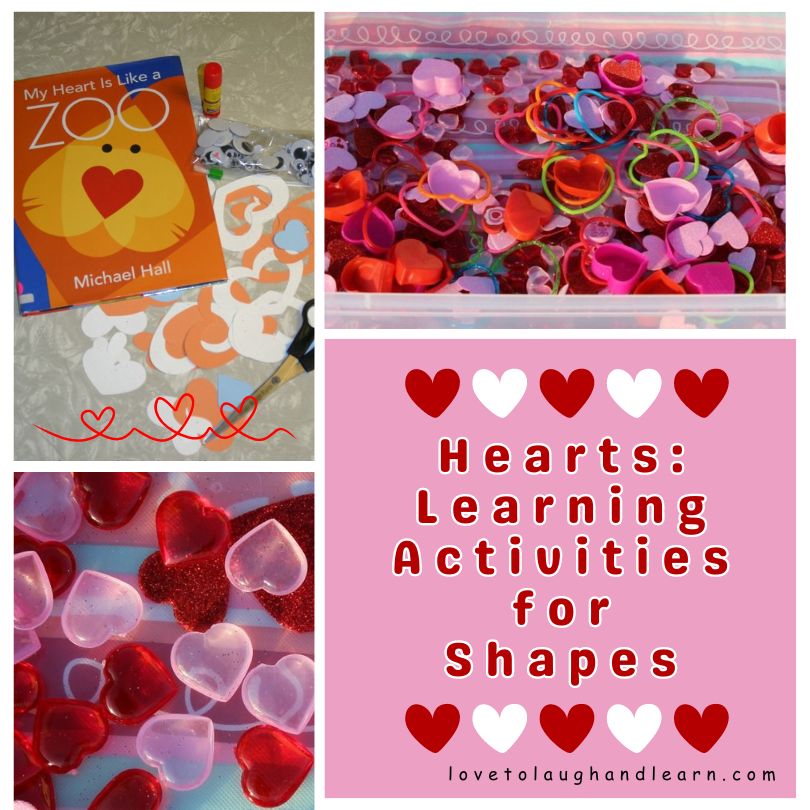
Are you ready for some fun with hearts? Although you see a lot of them around Valentine’s Day, anytime of year is a good time to have fun with hearts. Below you will find books and craft ideas to allow your child to enjoy learning with them.

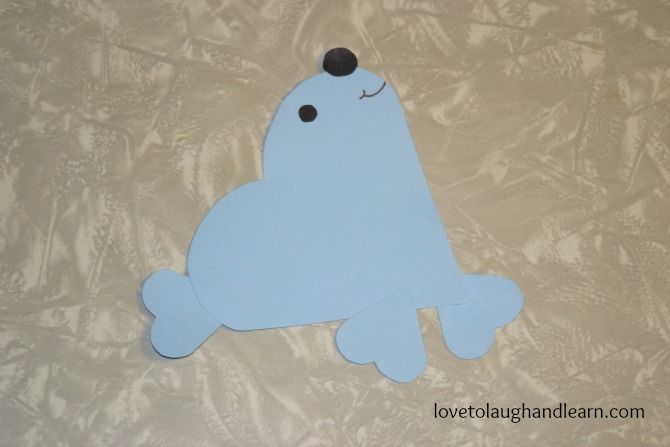
Seal Made from hearts.
Seal Made from Hearts


Content:

Toys
Craft:
Fun With Hearts
Snacks
Story Time
Related Posts

Toys

You might have a shape puzzle with a heart on it or maybe some heart-shaped beads to string. Do you have a shape sorter with a heart? When I taught preschool I used the Lauri Toys Shape and Color Sorter in my classroom. It has a heart shape and the children loved playing with it. Maybe you have a special stuffed animal you received for Valentine’s Day that has a heart on it. Please share with me what type of heart shaped toys you have by leaving me a comment.

(top)

Craft

Fun with Hearts

This craft idea came from a book so before you do the craft either purchase or borrow from the library, My Heart is Like a Zoo by Michael Hall, and read it to your child. It is a very cute story and the animals in the story are made out of endearing shape. So for this craft provide your child with a bunch of hearts of different shapes and different colors. If your child is old enough to use scissors have them cut them out his/her self.

Materials Needed:

Craft ideas to make with hearts.
Material for Heart Craft

My Heart Is Like a Zoo by Michael Hall
Different color  and size hearts or a tub of foam hearts
Different colored construction paper, if your child can cut out their own hearts
Glue
Wiggly eyes

Directions:

1. First read the book to your child.

2. Using the book as inspiration have your child create animals with the hearts. They may want to copy some of the animals in the book or they may create their own animals. Just have fun.

Seal Made from Hearts

I made a seal from hearts like the one in My Heart Is Like a Zoo.  What are you going to make?

(top)

Foods for snack or meal time

I could not find any naturally occurring heart shaped foods but there were a lot of cute ideas on Pinterest of how to create heart shaped items but it would be fairly easy to trim a strawberry to look like one. You can use a heart shaped cookie cutter on fruits and vegetables as well as meats and cheeses.

(top)

Story Time

The Day It Rained Hearts by Felicia Bond
Reading Level: Ages 3 – 8 yrs old
What would you do if it started raining hearts and it was close to Valentine’s Day? Pick up this cute little book to find out all the things that Cornelia Augusta did with the hearts she collected. You will enjoy finding out who her special friends are and the perfect Valentine she made for each of them.

My Heart Is Like a Zoo by Michael Hall
Reading Level: Ages 3 and up
This is such a cute rhyming book. Each of the animals in the zoo are made from hearts. They are quite creative. This book would not only be fun to read but also fun to try and make some of the animals that you find in it.

One Heart: A Valentine Counting Book by Maryann Cocca-Leffler
Reading Level: Ages 3 and up
There are lots of hearts to look at and count as the little girl shares hearts wherever she goes. There was one special heart she put in her pocket at the very beginning of the book. I wonder who that is for? Pick up this cute little book and find out who the final Valentine is for.

(top)


Related Posts

Shapes – Overview
Circles: Learning Activities for Shapes
Ovals: Learning Activities for Shapes
Squares: Learning Activities for Shapes
Rectangles: Learning Activities for Shapes
Triangles: Learning Activities for Shapes
Diamonds: Learning Activities for Shapes
Stars: Learning Activities for Shapes
Learning Should Be Fun
When Do Children Start Learning
The Lessons – Overview

(top)

Follow on Bloglovin

Save

Save

Save

Save

Save

Save

Filed Under: Learning Activities, Shapes Tagged With: educational activities, fun learning, heart, heart crafts, heart shapes, hearts, laugh, learn, learning, learning about hearts, learning concepts, learning fun, learning opportunities, learning shapes, lessons, love, love to laugh and learn, love to learn, making learning fun, Valentine crafts, Valentine's

  • 1
  • 2
  • 3
  • …
  • 5
  • Next Page »

Don’t Miss This Great Book

Categories

  • Articles
  • Attractions and Events
  • Autumn/Fall
  • Children's Books
  • Christmas
  • Coloring Pages
  • Colors
  • Community Helpers
  • Contest
  • Cooking with Kids
  • eBundles
  • Free Printables
  • Gardening
  • Halloween
  • Holidays
  • Learning Activities
  • Music
  • Reviews
  • Sensory Bins
  • Shapes
  • Thanksgiving
  • Uncategorized

Follow Me on Bloglovin

Follow on Bloglovin

Recent Posts

  • Yes, You Can Eat Raw Pumpkin! Try My Fall Harvest Fruit Salad
  • Zombie Zapper Brain Boost Smoothie
  • Learning Fun at Disney: The Importance of Imagination
  • Learning Fun at Disney: Manners
  • How to Eat A Pumpkin: A Lesson From a 3 Year Old
  • How to Eat a Pumpkin, Part 2
  • Pumpkins are Orange; and Other Learning Concepts
  • Love to Laugh and Learn at the Apple Orchard

Check This Out

Holiday Toy List – STEM Toys

Books

US Family Guide

USFamilyGuide.com

Recent Comments

  • Mama Carmody on Your Favorite Childhood Book
  • Lisa Smiley on Your Favorite Childhood Book
  • Harlow's Harvest on Eggs in a Nest: Cooking with Kids

Copyright © 2026 · Lifestyle Pro Theme on Genesis Framework · WordPress · Log in